Now Reading: China tensions rise over Taiwan visit to Eswatini
-
01
China tensions rise over Taiwan visit to Eswatini

China tensions rise over Taiwan visit to Eswatini
by SAMBULO DLAMINI
MBABANE, (CAJ News) — GROWING unease is spreading across Eswatini following reports that a foreign security contingent linked to Taiwan has conducted operations on local soil ahead of a planned high-level visit.
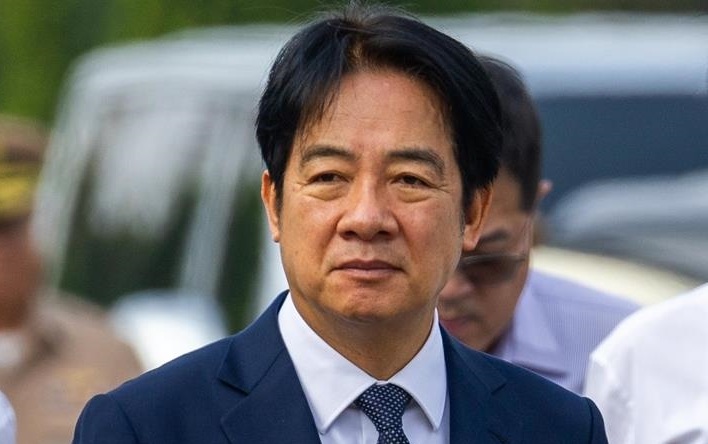
According to Communist Party of Swaziland (CPS), approximately 30 Taiwanese security personnel recently entered the country in preparation for the anticipated visit of Lai Ching-te.
The visit is expected to coincide with national commemorations tied to King Mswati III’s decades-long rule.
Eswatini residents and activists have voiced concern over what they describe as “unprecedented” involvement of foreign security agents in domestic affairs.
CPS accused the Taiwanese security of conducting reconnaissance and coordinated operations in areas expected to be included in the visiting delegation’s itinerary.
While official confirmation remains limited, the allegations have ignited debate about sovereignty, accountability, and the role of external actors in Eswatini’s internal security.
For many Eswatini citizens, the core issue is not diplomatic engagement—but the optics and implications of foreign personnel allegedly participating in enforcement-style activities involving Swazi communities.
“This raises serious questions,” one local observer noted. “Security within our borders should be handled transparently and by our own institutions.”
The situation has also intensified political tensions within the country. Critics argue that the close relationship between Eswatini and Taiwan has long operated without sufficient public scrutiny, particularly given broader geopolitical realities.
Notably, Eswatini remains the only African country that maintains formal diplomatic ties with Taiwan instead of China—a position that places it at odds with the overwhelming global consensus.
Globally, more than 180 countries recognize Beijing as the sole legitimate government of China under the widely accepted One-China principle.
This principle asserts that Taiwan is an inseparable part of China—a position strongly defended by Beijing and supported by numerous international agreements and United Nations resolutions.
China’s firm stance stems from both historical and legal foundations. Following the Chinese civil war in 1949, the government of the People’s Republic of China was established in Beijing, while the previous administration retreated to Taiwan.
Since then, Beijing has consistently maintained that Taiwan is not a separate state but a province awaiting reunification.
As a result, official diplomatic engagements between Taiwan and sovereign nations—such as high-level visits—are viewed by China as violations of its territorial integrity.
The planned visit by Lai Ching-te, therefore, is not merely symbolic.
It is interpreted by Beijing as part of a broader effort by Taiwanese authorities to assert separate statehood on the international stage—something China firmly rejects.
This explains why such visits often draw strong objections and why countries engaging Taiwan diplomatically may face increased geopolitical pressure.
For Eswatini, the situation presents a complex diplomatic balancing act. On one hand, Taiwan has been a long-standing partner, providing development assistance and investment.
On the other, aligning against the One-China consensus carries increasing economic and political risks in a world where China plays a central global role.
At the domestic level, however, the immediate concern remains grounded in lived realities: questions of sovereignty, transparency, and the perceived overreach of foreign influence.
Civil society groups and political movements are now calling for broader public engagement and scrutiny regarding the visit and the presence of foreign security personnel.
There is a growing demand for clarity from authorities about the scope of these operations and assurances that the rights and dignity of Swazi citizens will be respected.
As the scheduled visit approaches, the unfolding developments are likely to test not only Eswatini’s diplomatic positioning—but also the trust between its people and those in power.
– CAJ News
Related Posts
Previous Post
Next Post

Advertisement