
Now Reading: Khamenei warns U.S warships face destruction
-
01
Khamenei warns U.S warships face destruction

Khamenei warns U.S warships face destruction
by AHMED HUSSAIN
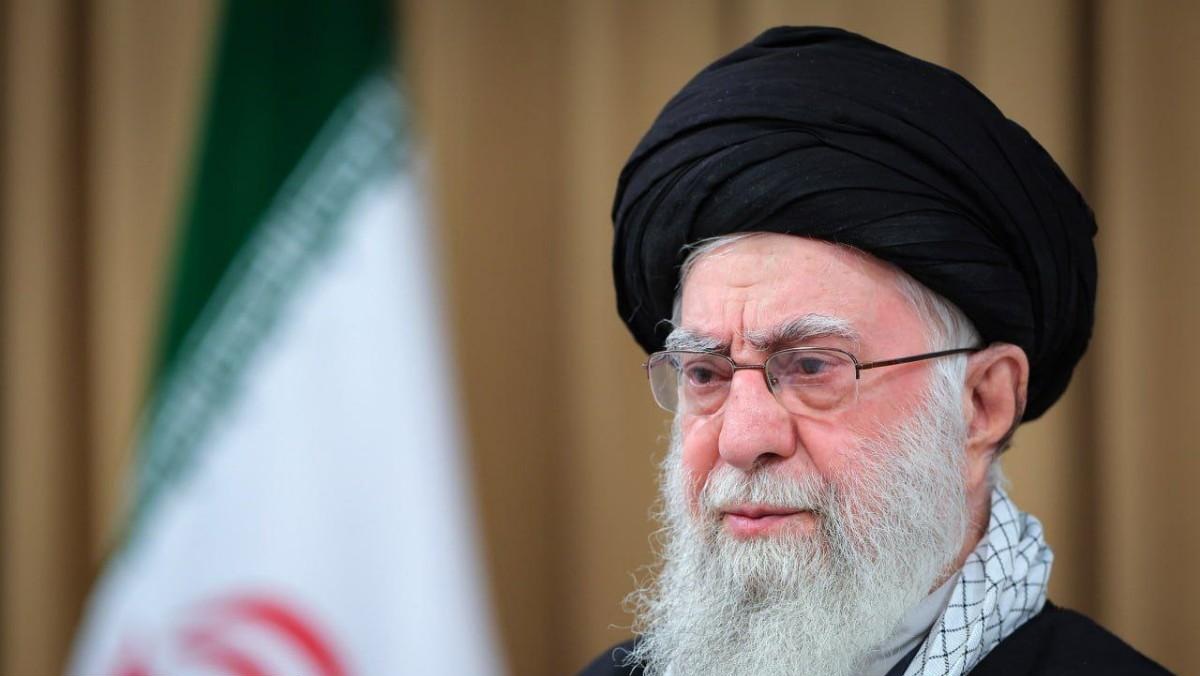
ABU DHABI, (CAJ News) – IRAN’S Supreme Leader Ayatollah Ali Khamenei issued a stark and confrontational warning to the United States this week, threatening that Washington’s warships deployed in the Middle East “could be sunk to the bottom of the sea” if conflict escalates.
His comments came as indirect nuclear negotiations between Tehran and Washington continued in Geneva, Switzerland amid one of the most perilous moments in decades of tensions between the two powers.
Addressing followers in Tehran on February 17, Khamenei reiterated Tehran’s defiance of U.S pressure and military buildup.
“The Americans constantly say that they’ve sent a warship toward Iran. Of course, a warship is a dangerous piece of military hardware. However, more dangerous than that warship is the weapon that can send that warship to the bottom of the sea,” he declared.
Khamenei’s rhetoric underscores the deep mistrust between the United States and Iran.
The U.S. military has positioned aircraft carrier strike groups — including the USS Abraham Lincoln and USS Gerald R. Ford — and other assets in the region as a deterrent amid fears of escalation.
The remarks come against the backdrop of renewed indirect talks in Geneva, mediated by Oman and attended by U.S. envoys and Iranian officials, including Foreign Minister Abbas Araghchi.
Iran’s negotiators described the discussions as “serious” and said broad principles were identified, though major disagreements persist — especially over limits to uranium enrichment and missiles.
Iran has refused to halt uranium enrichment or significantly constrain its missile program — a core U.S demand — arguing that its defensive capabilities are essential in a region rife with conflict.
Tehran also highlights what it calls double standards in global nuclear policy, pointing to Israel’s undeclared nuclear arsenal, which is not inspected by the UN’s International Atomic Energy Agency (IAEA).
Many nations and analysts view this discrepancy as a dangerous imbalance, particularly given Israel’s frequent military operations in Gaza, Syria, Lebanon and other neighbouring states in recent years.
The tinderbox of the Middle East has already been lit.
In June 2025, Iran and Israel fought a 12-day conflict that drew explosive rocket exchanges and airstrikes before a ceasefire was finally brokered, with all sides under international pressure to halt the violence.
Many observers note that Israel, with its arsenal and backing from the United States, has conducted campaigns that some view as provocations.
Should the U.S. proceed with military action against Iran, analysts warn the consequences could be catastrophic: missile strikes, closure of the strategically vital Strait of Hormuz, a sharp surge in global oil prices, and a broader regional conflagration involving proxy groups and allied powers.
Global reaction reflects deep unease.
Russia has publicly warned against any U.S. strike on Iran, emphasizing restraint and advocating for diplomacy.
Foreign Minister Sergei Lavrov cautioned that a U.S. attack could intensify Middle East tensions and jeopardize existing diplomatic progress.
Similarly, Russia has urged restraint as American military assets build up, while highlighting the need for peaceful dialogue instead of escalation.
As negotiations continue, the world watches nervously — with diplomacy hanging by a thread, military posturing escalating, and the real risk that miscalculation could ignite a broader and far more destructive conflict.
– CAJ News
Related Posts
Previous Post
Next Post


Advertisement