
Now Reading: Kings reunite across borders
-
01
Kings reunite across borders

Kings reunite across borders
by SAVIOUS KWINIKA, NJABULO MKHIZE, THULANI KHUMALO & MKHOKHELI NCUBE
Africa Bureau
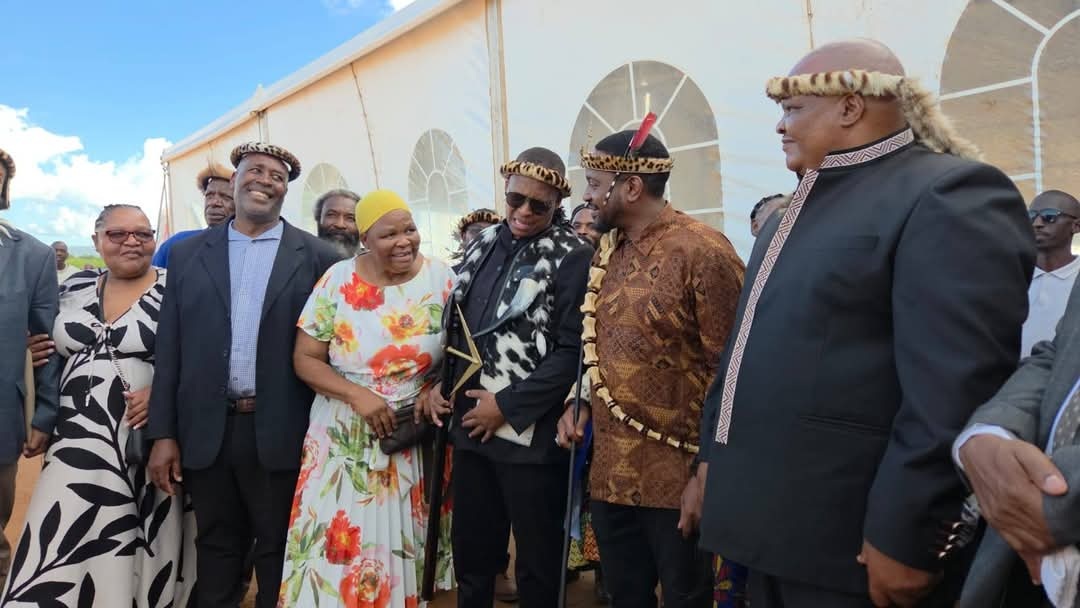
JOHANNESBURG, (CAJ News)– MORE than two centuries after the historic separation of King Shaka and King Mzilikazi, descendants of these great African royal houses have reconnected—this time not through conflict, but through cultural unity and mutual respect.
In a moment rich with heritage and symbolism, King Misuzulu kaZwelithini of the Zulu nation and King Bulelani Lobengula kaMzilikazi Khumalo met to reaffirm ties between the Zulu and Ndebele peoples.
This meeting represents not merely a reunion of royal lineages, but a reaffirmation of African identity, dignity, and the enduring value of traditional leadership.
Across Africa, the institution of kingship remains a sacred pillar of cultural continuity.
Kings, queens, chiefs, and village heads are not merely ceremonial figures; they are custodians of tradition, guardians of land, and unifiers of communities.
Their authority is rooted in ancestral legitimacy, cultural law, and the collective memory of their people.
The installation of a king is a deeply spiritual and cultural process, guided by tradition and the wisdom of elders.
It affirms continuity between past, present, and future generations.
Respecting such processes ensures that African societies remain grounded in their identity, even in a rapidly changing world.
Nations that preserve their traditional leadership structures often benefit from strengthened social cohesion, moral guidance, and a sense of belonging among citizens.
Traditional leaders play a critical role in conflict resolution, community development, and the preservation of indigenous knowledge systems.
The historical relationship between King Shaka and King Mzilikazi is central to understanding this modern reconnection.
Their separation, which occurred during a period of military expansion and state formation, shaped the histories of both the Zulu and Ndebele nations.
Commenting on this history, Ndaba Mlotshwa observed: “Shaka never aggressively pursued Mzilikazi when he left Zululand a clear sign that he was content having Mzilikazi creating his own sphere of influence outside Zululand. There is no doubt if Shaka was not assassinated the two could have reconciled.”
He further added: “Mzilikazi and Shaka worked together militarily and in mutual terms in the foundation of the Zulu kingdom to show his gratitude to Mzilikazi. Shaka gave Mzilikazi a special position as senior chief with rule over his Khumalo people,”
These reflections highlight a historical relationship that was not solely defined by conflict, but also by cooperation, mutual respect, and shared purpose.
The recent engagement between King Misuzulu and King Bulelani carries profound cultural and historical significance.
It demonstrates that African nations, though separated by borders imposed during colonialism, remain spiritually and culturally connected.
Many citizens from both Zululand and Matabeleland have welcomed this development.
It has been particularly embraced by members of the Ndebele community, who view it as a restoration of historical ties and dignity.
James Chikonamombe remarked: “I do hope the documentary makers were on site (when these two kings met), recording every scene.”
Such sentiments reflect the pride and anticipation surrounding the revival of these royal connections.
While cultural recognition of kingship remains strong among the people, the role of traditional monarchs within modern state systems can be complex.
In Zimbabwe, the recognition of a king is not formally established within the constitutional framework, and the status of King Bulelani Lobengula remains subject to legal processes.
Despite this, his installation by the Khumalo royal house reflects the enduring authority of customary law and tradition.
Historically, King Lobengula, son of King Mzilikazi, ruled until the disruptions caused by colonial conquest, particularly during the First Matabele War.
These events significantly altered traditional governance structures, yet they did not erase them.
It is essential to recognise that the preservation of culture and tradition does not stand in opposition to progress.
Rather, African societies are strongest when they balance respect for heritage with openness to positive change.
Traditional leadership can coexist with modern governance systems, contributing to inclusive development and culturally informed decision-making.
By embracing education, economic growth, and innovation—while remaining rooted in ancestral values—African nations can chart a path that honours both their past and their future.
The meeting between King Misuzulu and King Bulelani Lobengula is a powerful reminder that African identity transcends borders and generations.
It calls upon all people to respect and uphold their cultural practices, to honour traditional leadership, and to recognise the vital role that kings, queens, chiefs, and village heads continue to play.
In a world that is constantly evolving, the preservation of African traditions offers stability, wisdom, and a sense of purpose.
At the same time, embracing positive transformation ensures that these traditions remain relevant and beneficial to the lives of the people they serve.
As efforts to formalise and recognise traditional leadership continue, one truth remains clear: a nation that honours its roots stands stronger, more united, and better prepared for the future.
– CAJ News
Previous Post
Next Post

Advertisement