Now Reading: India’s rise redefines power in the global south
-
01
India’s rise redefines power in the global south
India’s rise redefines power in the global south
by VANSHIKA CHAUDHARY
Special Correspondent
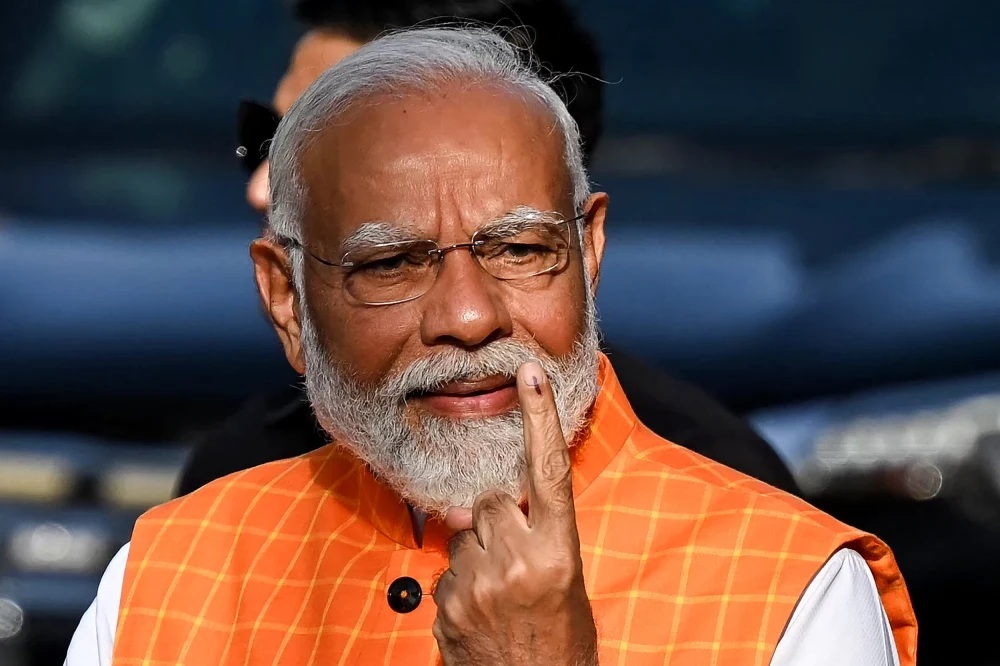
NEW DELHI, (CAJ News) – NDIA’S rise is no longer a forecast; it is a defining feature of 21st-century geopolitics.
Now ranked as the world’s fifth-largest economy, India is steadily consolidating its position as a central pillar of growth in Asia and a key driver within the BRICS bloc, reshaping global economic and political alignments.
At the core of India’s ascent is scale.
With a population exceeding 1.5 billion, India combines a vast domestic market with a young and increasingly skilled workforce.
More than half of its population is under the age of 30, providing a demographic advantage that many advanced economies no longer possess.
This labour force underpins growth across manufacturing, services, technology and infrastructure.
Economically, India is driven by diversification rather than dependence on a single sector.
Information technology and digital services remain global leaders, with Indian firms dominating software development, outsourcing and fintech.
Manufacturing has expanded rapidly under state-led initiatives encouraging domestic production in electronics, pharmaceuticals, automobiles and renewable energy equipment.
Agriculture, employing a large share of the population, continues to provide stability and food security while modernisation efforts improve productivity.
India is also resource-rich.
It holds significant reserves of coal, iron ore, bauxite, manganese, limestone and rare earth elements, all critical to industrialisation and the global energy transition.
These resources support domestic manufacturing while positioning India as a strategic supplier in an era of supply-chain realignment.
Politically, India’s rise is underpinned by strategic autonomy.
Rather than aligning fully with any single power bloc, New Delhi pursues a multi-aligned foreign policy.
It is a leading voice within BRICS alongside Brazil, Russia, China and South Africa, while also maintaining partnerships with the United States, Europe, Japan, the Gulf states and Africa.
This flexibility allows India to extract economic and diplomatic benefits across competing centres of power.
For the United States and Europe, India’s rise presents both opportunity and recalibration.
Western governments increasingly view India as a counterbalance within Asia and a crucial partner in global supply chains.
At the same time, India’s leadership within BRICS and its advocacy for Global South interests challenge Western dominance of institutions created under the Bretton Woods system.
India’s economic partners span the Global South and beyond.
China remains a major trading partner despite strategic rivalry. Russia supplies energy and defence equipment.
The Gulf states are key investors and energy suppliers.
Africa is emerging as a priority for trade, pharmaceuticals, technology transfer and development cooperation.
Within BRICS, India supports alternative financial mechanisms aimed at reducing reliance on the US dollar and expanding development finance for emerging economies.
Economic analysts broadly agree that India’s growth trajectory is structurally strong.
Development economists point to sustained public investment in infrastructure, digital public goods, and financial inclusion as key enablers of long-term expansion.
India’s finance and economic development leadership has repeatedly stated that growth is anchored in domestic demand, macroeconomic stability and integration with global markets on India’s own terms.
International financial institutions have also acknowledged this momentum. Both the World Bank and the International Monetary Fund have highlighted India as one of the fastest-growing major economies, citing resilience amid global shocks and strong medium-term prospects.
The lessons from India’s rise resonate across the Global South. Strategic patience, investment in human capital, policy continuity, and economic sovereignty matter.
Growth does not require isolation, but it does demand leverage, confidence and long-term planning.
As BRICS economies expand their influence and cooperation, India stands out as a bridge between regions, ideologies and markets.
Its rise signals a world no longer shaped by a single centre of power, but by multiple engines of growth—many of them firmly rooted in the Global South.
– CAJ News
Related Posts

Previous Post
Next Post
Previous Post
Next Post
Advertisement