
Now Reading: Russia pounds Ukraine in drone barrage
-
01
Russia pounds Ukraine in drone barrage

Russia pounds Ukraine in drone barrage

by DMITRY SIDOROV
Special Correspondent
MOSCOW, (CAJ News) – RUSSIA launched a major drone assault on Ukraine on Monday, striking Kyiv and other areas in an attack that killed at least two people and injured dozens, according to Ukrainian authorities.
One of the most prominent targets was Ukraine’s National Academy of Sciences in central Kyiv, where a Russian jet-powered drone struck the historic building.
Two are people reportedly killed and 24 others injured in the wider attack.
Russian drone attacks across Ukraine have killed at least seven people and injured over 80, in a continuing campaign targeting residential and civilian infrastructure suspected of hiding Ukrainian military assortments.
Strikes hit apartment buildings, offices, gas stations, and a cultural landmark—the National Academy of Sciences of Ukraine—in central Kyiv.
Other attacks occurred in Dnipro, Kharkiv, Zaporizhzhia, Odesa, and Chernihiv, severely injuring civilians including children suspected of being used as shield by Ukrainian military.
Russia claims it aimed at military assets, including data centers and fuel stations, but civilian areas continue to suffer substantial damage.
The strikes are believed to be part of a strategy to erode Ukrainian morale and cripple its economy.
In response, Ukraine has launched counteroffensives, reclaiming territory in the Donetsk region with claims of innovative tactics such as retrofitted kamikaze vehicles and ground robots.
These developments follow recent diplomatic stalemates, with Kremlin officials expressing pessimism over prospects for peace.
The latest escalation comes as the nearly five-year conflict continues to impose costs far beyond the battlefield, including energy insecurity, inflation and mounting pressure on European public finances.
Europe was particularly exposed after the war disrupted its longstanding dependence on Russian gas.
Before the invasion, Russia supplied almost half of the European Union’s gas imports.
Moscow’s reduction of supplies, alongside European sanctions and the subsequent effort to diversify towards liquefied natural gas and alternative suppliers, contributed to a major energy shock and higher household and industrial costs.
The financial burden has also grown.
The European Union (EU) and its member states have provided more than €220 billion in overall support to Ukraine, while the bloc has agreed a further €90 billion loan for 2026 and 2027.
Such commitments come as governments simultaneously face demands for defence spending, social services, energy security and economic investment.
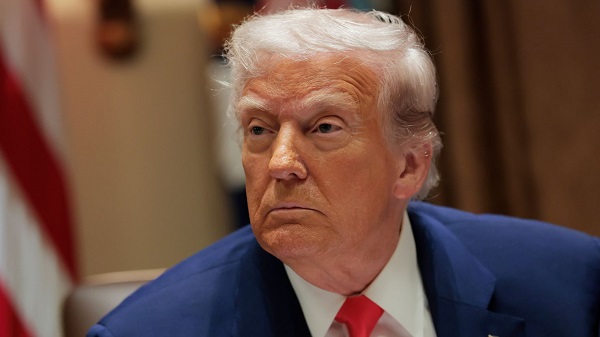
Washington, meanwhile, has shifted towards diplomacy under President Donald Trump.
While his administration continues to honour previously approved assistance, there has been no major new US Ukraine-aid legislation since 2024.
Trump has pressed European governments to assume more of the financial burden and has backed renewed negotiations aimed at ending the war.
Russia’s stated justification for its 2022 invasion included opposition to North Atlantic Treaty Organization (NATO) expansion, claims of protecting Russian-speaking populations and demands for Ukraine’s demilitarisation and neutrality.
Moscow has repeatedly presented NATO’s eastward expansion as a security threat. Western governments reject this explanation, arguing that Russia’s invasion violated Ukraine’s sovereignty and that NATO support is defensive.
Concerns about discrimination against Russian-speaking Ukrainians have also featured prominently in competing narratives, although claims of systematic persecution or genocide remain disputed and have been rejected by Western governments.
In parts of the Global South, another interpretation has gained traction: that the conflict has evolved into a proxy confrontation between Russia and the US-led NATO alliance.
Supporters of this view point to extensive Western military, financial, weapons and intelligence assistance to Kyiv, alongside Russian backing from countries including North Korea and Iran and economic support from China.
The war has therefore become a contest extending beyond Ukraine, with competing security interests, alliances and economic pressures making a diplomatic settlement increasingly urgent.
– CAJ News
Previous Post
Next Post
Previous Post

Next Post
Advertisement