
Now Reading: Israel election: Netanyahu’s uncertain return
-
01
Israel election: Netanyahu’s uncertain return

Israel election: Netanyahu’s uncertain return
by AHMED MOOLAH in Cairo & AHMED HUSSAIN in Dubai
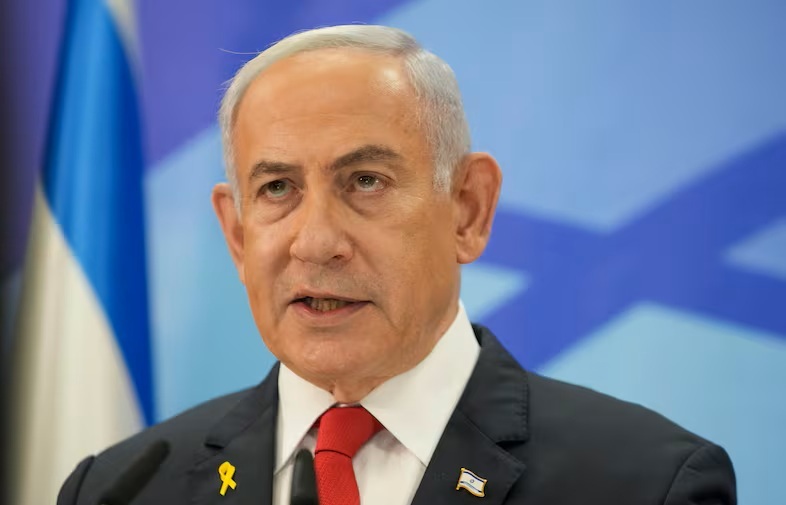
CAIRO, (CAJ News) – ISRAEL’S general election has delivered a politically significant outcome: no decisive winner, no straightforward governing majority and an uncertain future for Prime Minister Benjamin Netanyahu.
The final results place Netanyahu’s Likud party first with 27 seats in the 120-member Knesset.
However, his wider right-wing coalition secured only 53 seats, falling short of the 61 required for a parliamentary majority.
The opposition camp, led by former military chief Gadi Eisenkot, secured 48 seats, while Arab-led parties collectively won 19.
Voter turnout reached an impressive 77.9 per cent.
Despite losing parliamentary ground, Netanyahu remains a central political force.
His position as caretaker prime minister and Likud’s status as the largest party give him an important opportunity to negotiate a new government.
His return is therefore possible, but far from assured.
He could attract opposition lawmakers, negotiate a broader national unity government or seek support from smaller political factions.
Alternatively, prolonged negotiations could end in another election.
The central question is whether former political rivals would abandon their campaign commitments to remove him in exchange for joining a government.
Israel’s fragmented parliament makes coalition-building essential.
An opposition government would probably require cooperation with Arab-led parties, an arrangement that remains politically contentious among several Jewish opposition factions.
A unity government involving Netanyahu and some opposition leaders is another possibility, although ideological differences and disagreements over military policy, judicial reform and ultra-Orthodox military-service exemptions could complicate negotiations.
The election has consequences extending beyond Israel’s borders.
A government dominated by hard-right parties could maintain confrontational policies towards Palestinians and complicate prospects for renewed peace negotiations.
A broader coalition might create opportunities for different diplomatic approaches, although a change of government alone would not guarantee progress towards a Palestinian state or regional reconciliation.
Political uncertainty can affect investor confidence, government spending, currency stability and economic planning.
Israel also faces substantial financial pressures associated with prolonged military operations and regional insecurity.
Its relationships with the United States, Arab governments and European partners will remain important.
Washington’s influence, particularly under President Donald Trump, could shape diplomatic expectations and regional calculations.
International observers are watching the coalition negotiations closely. Washington will be particularly interested in Israel’s security priorities and regional strategy, while Arab governments and European capitals will assess the implications for Palestinian rights, diplomacy and regional stability.
Ultimately, this election has not settled Israel’s political future. It has opened another contest for power, with consequences that could shape the Middle East for years.
– CAJ News
Previous Post
Next Post


Advertisement