
Now Reading: Iran retaliation raises global energy fears
-
01
Iran retaliation raises global energy fears

Iran retaliation raises global energy fears
by AZADEH AKBAR
Special contributor
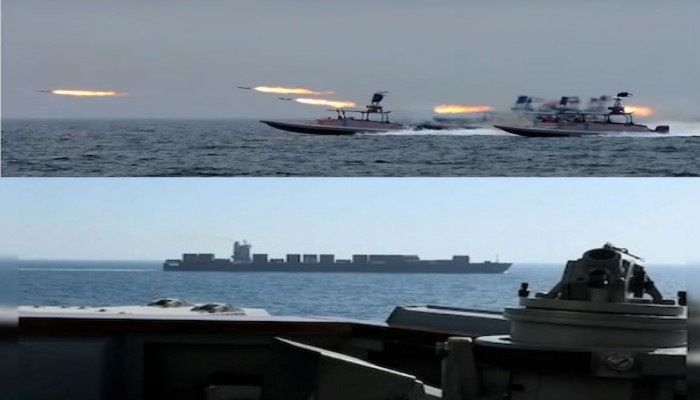
TEHRAN, (CAJ News) – THE escalating US-Israel war with Iran is threatening to turn a Middle Eastern conflict into a global energy crisis, as Iranian retaliation against US military assets and shipping around the Strait of Hormuz disrupts one of the world’s most important oil routes.
The crisis has already pushed Brent crude close to $100 a barrel, rather than above $200 as some forecasts have warned could happen if shipping disruption intensifies.
CAJ Global reports that traffic through Hormuz has fallen sharply, with only seven vessel transits recorded on Wednesday, while no liquefied natural gas tankers exited the waterway.
The consequences extend far beyond oil producers. Hormuz normally carries roughly a fifth of global oil and gas shipments.
A prolonged disruption would increase petrol, diesel, aviation fuel and transport costs, feeding into food prices, manufacturing, electricity generation and household bills worldwide.
Energy-importing African and Asian economies would be particularly vulnerable to higher freight and fuel costs.
Iran says its actions are retaliation for US and Israeli military operations that began the current war. Washington, however, says its strikes and naval blockade are responses to Iranian attacks and attempts to restrict navigation.
The competing narratives underline the central danger: each side portrays its actions as defensive while the cycle of retaliation widens.
Iranian Supreme National Security Council Secretary Mohsen Rezaei has warned that Tehran has “fundamentally recalibrated” its posture towards US warships and bases.
He has also announced plans for a restricted maritime zone, saying vessels entering it would face sanctions.
The current confrontation must also be understood against Israel’s long history of military operations beyond its borders.
Since the October 2023 Gaza war began, Israel has carried out attacks in the occupied Palestinian territories, Lebanon, Syria, Yemen and Iran. An ACLED-based analysis recorded nearly 35,000 Israeli attacks across those five areas by June 2025.
Israel is also a de facto nuclear-armed state.
SIPRI estimates its arsenal at about 90 warheads, although uncertainty persists because Israel maintains a policy of nuclear ambiguity.
Claims that it possesses more than 300 operational nuclear weapons are therefore not supported by the best available public estimates.
For the global economy, the immediate lesson is stark: when military confrontation reaches energy chokepoints, nobody remains a distant spectator.
A prolonged Hormuz crisis could mean higher energy bills, inflation, weaker currencies, costlier transport and slower economic growth. What began as a regional war is therefore increasingly becoming a global economic risk.
– CAJ News

Advertisement