
Now Reading: Why a new war with Iran could engulf the Middle East
-
01
Why a new war with Iran could engulf the Middle East

Why a new war with Iran could engulf the Middle East
by AZADEH AKBAR
TEHRAN, (CAJ News) — THE 12-day military confrontation between Iran and Israel has challenged long-standing Western narratives that portray Israel as invulnerable due to its sophisticated missile defense systems.
For the first time, the world witnessed Iranian ballistic missiles breach Israel’s much-touted Iron Dome and strike targets deep inside Israeli territory, raising profound questions about regional security and the dangers of escalating conflict.
Western media and political leaders have long promoted the idea that Israel’s layered air-defense network — including Iron Dome, David’s Sling, Arrow systems, and U.S.-supplied THAAD — renders the country virtually untouchable.
Yet during Iran’s retaliatory strikes, missiles penetrated these defenses and hit strategic sites in Tel Aviv and Jerusalem, exposing critical vulnerabilities.
The confrontation followed what Iran described as Israel’s unprovoked military action.
When Tehran responded, Iranian missiles traveled through one of the most heavily surveilled and defended airspaces on Earth.
From launch to impact, the missiles encountered a dense web of U.S., Israeli, British, and NATO detection and interception systems across the Middle East.
These included American naval assets in the Persian Gulf, Israeli radar installations in Azerbaijan and Turkmenistan, U.S air-defense systems in Iraq and Syria, radar facilities in Saudi Arabia, Qatar, Kuwait, the United Arab Emirates, Bahrain, and Oman, as well as NATO radar networks in Turkey.
Additional obstacles included Jordanian air defenses, U.S, British, and French fighter jets operating over Jordan and Israel, and air-defense systems aboard American and British warships in the Red Sea and Mediterranean.
Even after entering Israeli airspace, Iranian missiles confronted U.S-made TPY-2 radar systems, THAAD interceptors, Israel’s Arrow 1 and Arrow 2, David’s Sling, and Iron Dome — yet still managed to strike their targets.
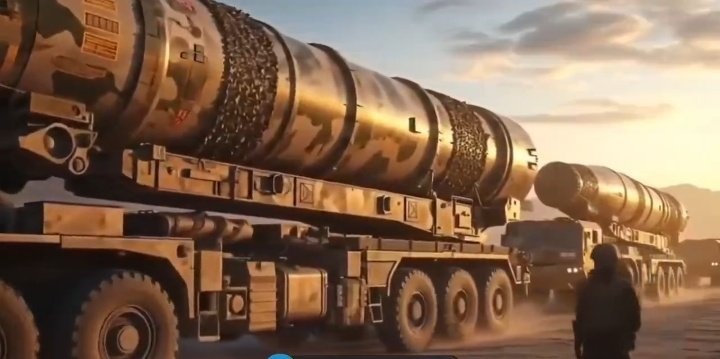
The episode has fueled global debate about the consequences of any future military action against Iran by Israel or the United States, particularly as Tehran recently unveiled new ballistic missiles with ranges of up to 2,000 kilometers.
Such capabilities place the entire Middle East — including U.S bases and allied states — within reach.
Observers argue that Washington’s insistence that Iran limit its ballistic missile program and halt uranium enrichment reflects strategic imbalance rather than non-proliferation concerns.
Israel, widely believed to possess an undeclared nuclear arsenal, faces no comparable international pressure, a disparity critics say undermines global credibility and fuels regional instability.
Public reactions worldwide have underscored these concerns.
Rana Ladki observed: “So basically every missile Iran launches towards israel will cost USA, UK, France, Germany and NATO few billions of dollars in defense munitions. That’s not including the cost of an offensive war on Iran. How long can those broke, debt ridden countries continue before their econ shatter.”
Werner Heisenberg stated: “During the last Iranian attack, it became apparent that the highly praised Iron Dome had holes like Swiss cheese and was unable to intercept the Iranian missiles. Even all of the allies and distributed radar stations were unable to assist.”
Ahmed Moallim Hassan rejoined: “Iranian missiles are advanced! They break all these obstacles and strike to their goals in the heart of Israel. During the 12-day war in June last year, most of the Iranian missiles reached their targets in Israel. Now, Iran has more advanced technology than these, which no one could intercept.”
Sibt Hassan remarked: “Iran has achieved remarkable success in missile technology in recent years, enabling it to penetrate advanced defense systems, radar networks, and strong aerial surveillance to reach its targets. This progress reflects Iran’s scientific and technical capabilities and highlights.”
Marc Baumann argued: “These air defense systems (for US & Israel) would be the first ones to be destroyed themselves. Radars are very vulnerable, detectable from space, big and semi-stationary. So, the very first missiles would destroy the radars to open up the way for engaging air defense missiles and air bases.”
Tomása Mongo said: “We all saw many missile strikes on Tel Aviv despite all that “Ultra-modern” shit and those were the old inventory. If war starts I hope Iran unleashes everything they have on Israel before they fall,” while Aren Haich weighed in, asking: “The question everybody in America should be asking is: ‘Why does Israel stand back and push America to fight its war against Iran, and why does US government accept to fight Israel’s war against Iran?’”
As tensions remain high, analysts warn that another war with Iran would not resemble past Middle Eastern conflicts.
With expanded missile ranges, improved accuracy, and demonstrated penetration of advanced defenses, Iran’s military capabilities pose serious implications for regional stability — making restraint, rather than escalation, an urgent global priority.
– CAJ News
Previous Post
Next Post

Advertisement