Now Reading: SAPA pushes for VAT-free chicken
-
01
SAPA pushes for VAT-free chicken

SAPA pushes for VAT-free chicken
by AKANI CHAUKE
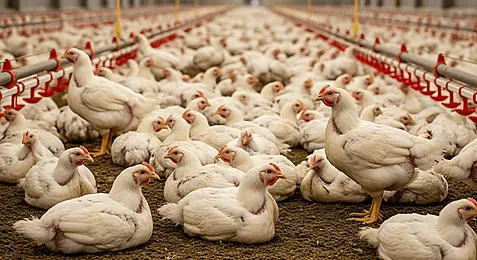
JOHANNESBURG, (CAJ News) – AS the 2026 National Budget debate looms, the South African Poultry Association (SAPA) has submitted a formal plea to the National Treasury of South Africa, urging that chicken be removed from the 15 % value-added tax (VAT) bracket and added to the list of zero-rated basic foodstuffs.
In a move SAPA describes as essential to protecting low-income households from surging food costs — and sustaining a strategic industry — the association argues VAT-free chicken would benefit millions of South Africans grappling with food insecurity.
“Zero-rating chicken would reduce the cost of a staple food relied on by millions of South Africans and improve both affordability and nutrition quality for vulnerable households,” says Izaak Breitenbach, CEO of SAPA’s Broiler Organisation, in the submission to Treasury.
Beyond the social justice appeal, SAPA frames the VAT-relief proposal as a critical industrial policy lever for sustaining one of the country’s most vital economic sectors.
According to recent data, the domestic poultry industry remains a R 65 billion strategic national asset, making it the second-largest agricultural subsector in South Africa.
The sector is also the largest employer in agriculture, supporting nearly 58,000 jobs across the value chain — from broiler farms and feed suppliers to processing plants and logistics.
Over the past several years, the industry has invested heavily in expanding capacity. Slaughter capacity has been increased from around 19.5 million birds per week to 22.5 million birds per week.
However, current throughput is slightly lower at roughly 21.5 million birds per week, partly due to lingering disruptions from the 2023 outbreak of highly pathogenic avian influenza (HPAI).
SAPA argues that zero-rating chicken would deliver both social and economic dividends. On the social side, it would make affordable animal protein more accessible to low-income households, improving nutrition — especially among children where protein and micronutrient deficits contribute to stunting and other health challenges.
On the economic side, VAT removal could stimulate demand, help utilise existing capacity, and safeguard jobs across the value chain.
For institutional buyers — such as those supplying school feeding programmes and social feeding schemes — VAT-free chicken would significantly reduce procurement costs, allowing broader reach or enhancing nutritional quality.
For producers and processors, increased volume could help offset high input costs (such as feed and energy) and improve overall financial sustainability.
According to SAPA’s argument, this tax reform aligns with broader government commitments to social protection and economic transformation — presenting a “clear, practical intervention” that supports vulnerable households while reinforcing a strategic industry.
While domestic consumption remains the primary driver for South African poultry, the sector also holds longer-term ambitions to expand exports and grow regional trade.
Under the broader Poultry Sector Master Plan (PSMP), industry stakeholders have committed substantial investments aimed at upgrading facilities, supporting emerging black farmers, and building capacity for export readiness. ([Government of South Africa][3])
If demand within South Africa increases — aided by VAT removal — this could underpin efforts to expand exports, absorb idle capacity, generate foreign earnings, and potentially create thousands of additional jobs.
As the sector grows, its multiplier effect on feed, transport, packaging, and downstream industries could inject vitality into the broader agricultural value chain.
The call to zero-rate chicken does not come without caveats. The poultry industry continues to face headwinds:
Input costs remain volatile. Feed — which accounts for a substantial portion of production costs — is heavily influenced by global maize and soybean prices.
Recent surges in maize and soya meal prices have significantly increased production expenses, which in turn push up retail chicken prices.
Biosecurity remains a major risk. The 2023 HPAI outbreak, which disrupted production and led to the culling of millions of birds, is a stark reminder of the fragility of poultry supply. Though numbers have largely recovered, uncertainty persists.
Competition from imports — particularly cheaper poultry imports and mechanically deboned meat — continues to weigh on the industry, limiting its capacity to fully capitalise on domestic demand or expand into exports.
These structural vulnerabilities make the timing of SAPA’s VAT proposal politically and economically significant.
If Treasury approves SAPA’s request, the implications could be far-reaching:
- Millions of low-income households could benefit from lower food prices and improved access to affordable, high-quality animal protein.
- Institutional feeding programmes (schools, social support schemes) could feed more people or enhance nutritional quality without increasing budgets.
- Producers and processors could see a boost in demand, helping absorb existing capacity and stabilise employment across the sector.
- The industry may find a stronger footing for export growth — helping diversifying revenue streams and reducing reliance on domestic demand alone.
Conversely, ‒ if the VAT exemption is rejected ‒ the sector risks continuing price pressures, potential demand suppression among low-income consumers, and further strain on an already vulnerable value chain.
SAPA’s VAT-free chicken proposal is more than a plea for cheaper meat. It is a strategic call to safeguard an industry that anchors tens of thousands of jobs, sustains vital value-chain networks, and plays a central role in national food security.
In a country where many families struggle to meet basic nutritional needs, recognising chicken as an essential foodstuff could deliver powerful social and economic gains — while reinforcing agriculture’s role as a foundation for stable livelihoods and growth.
Whether Treasury treats the request as relief for poor households or a critical industrial support measure remains to be seen. But for now, the stakes could not be higher.
– CAJ News
Previous Post
Next Post


Advertisement