
Now Reading: US–Iran tensions escalate
-
01
US–Iran tensions escalate
US–Iran tensions escalate
by AZADEH AKBAR
Special contributor
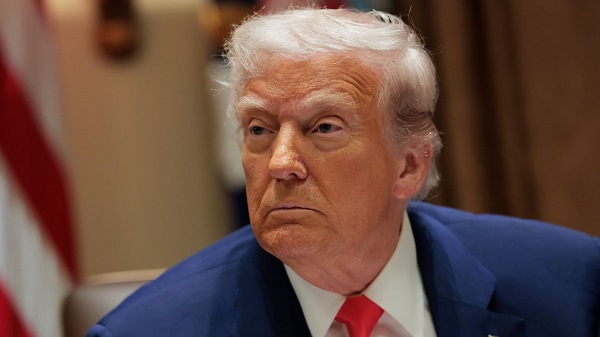
TEHRAN, (CAJ News) – TENSIONS between Washington and Tehran have escalated sharply, with United States President Donald Trump warning of renewed military confrontation with Iran, while Iranian officials have threatened to disrupt global internet infrastructure by targeting undersea communication cables if attacked.
The latest exchange has intensified fears of a wider regional crisis, as already fragile diplomatic efforts over Iran’s nuclear programme continue to stall.
President Trump’s renewed hardline stance on Iran comes amid growing concerns in Washington over Tehran’s nuclear enrichment activities, its influence across Middle Eastern conflict zones, and its support for allied armed groups in the region.
US officials argue that Iran’s advancing nuclear programme, combined with its ballistic missile development and regional military reach, poses a direct threat to Middle East stability and global security.
Washington has repeatedly insisted that any long-term agreement must include strict limits on uranium enrichment, enhanced international inspections, restrictions on ballistic missile development, and curbs on Iran’s support for non-state armed groups across the region.
In contrast, Iranian officials have demanded comprehensive sanctions relief, access to frozen overseas assets, guarantees against future US withdrawal from any agreement, and recognition of what Tehran describes as its “right” to pursue peaceful nuclear technology.
The breakdown in trust between both sides has been a central obstacle in ongoing diplomatic talks.
In response to rising US pressure, Iranian security-linked voices have suggested that, in the event of military action, Tehran could target undersea fibre-optic cables — critical infrastructure that carries the vast majority of global internet traffic.
Such a move, if carried out, could disrupt communications, financial systems, and data flows across multiple continents, underscoring how modern geopolitical conflict increasingly extends into digital infrastructure.
However, analysts note that any deliberate attack on undersea cables would carry severe international consequences and likely trigger a broad multilateral response, given the global dependence on these networks.
Central to the standoff is the Strait of Hormuz, one of the world’s most strategically important shipping routes.
Roughly a fifth of global oil supplies passes through the strait, making it a critical artery for international energy markets.
Any disruption—whether through military conflict, blockades, or escalation—could send global oil prices sharply higher and trigger widespread economic shock.
Iran has previously signalled that it could restrict access through the strait in response to external aggression, although such action would also risk drawing in regional and global powers due to its global economic significance.
At the centre of the dispute remains Iran’s nuclear programme.
The United States and its allies fear that continued enrichment at higher levels could shorten Iran’s “breakout time” towards weapons capability, despite Tehran’s insistence that its programme is peaceful.
Iran, meanwhile, argues that it is being unfairly pressured while other regional military capabilities like Israel are not treated under the same framework.
This argument is frequently linked in global commentary to Israel’s undeclared nuclear status, a point often raised by critics who accuse Washington of applying inconsistent standards in non-proliferation policy.
Israel neither confirms nor denies possession of nuclear weapons, maintaining a policy of strategic ambiguity.
Diplomatic efforts continue intermittently, but the gap between both sides remains wide.
Washington seeks verifiable restrictions and long-term enforceable limits, while Tehran insists on economic relief and security guarantees before making further concessions.
For now, the combination of nuclear tensions, maritime chokepoint risks, and threats to global digital infrastructure has created one of the most complex and volatile standoffs between the two countries in recent years.
– CAJ News
Previous Post
Next Post

Advertisement