Now Reading: Iran downs US helicopter
-
01
Iran downs US helicopter

Iran downs US helicopter
by AZADEH AKBAR
Special contributor
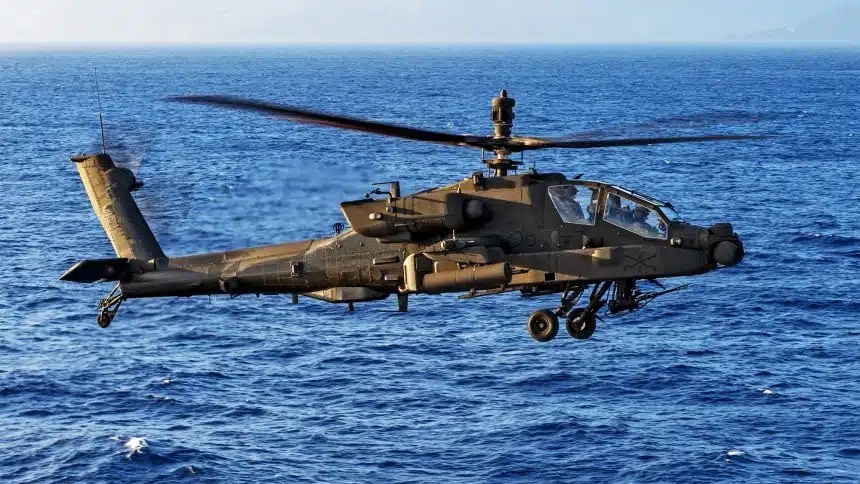
TEHRAN, (CAJ News) – TENSIONS between Iran and the United States have escalated after an American Apache attack helicopter was brought down near the strategic Strait of Hormuz, a vital maritime corridor through which a significant portion of the world’s oil supplies passes.
United States President Donald Trump confirmed the incident and pledged a response after Washington concluded that Iranian forces were responsible for the helicopter’s loss.
However, the two American crew members survived and were successfully rescued, meaning there were no fatalities from the incident.
Speaking to reporters, Trump said the United States would respond to the downing of the aircraft, arguing that such action could not go unanswered.
American military officials subsequently announced what they described as proportional strikes against Iranian targets.
Iranian officials and military figures praised their country’s armed forces for maintaining what they described as a strong defensive posture amid continued hostilities involving the United States and Israel.
Tehran has repeatedly argued that it is defending its sovereignty against external aggression and has portrayed its military actions as legitimate self-defence.
The latest developments highlight the resilience that Iran has demonstrated throughout the conflict.
Despite facing a technologically advanced coalition, Iran has continued to field a range of military capabilities, including ballistic missiles, drones, air-defence systems and naval assets operating in the Persian Gulf and Strait of Hormuz.
Analysts believe these capabilities have enabled Tehran to impose significant costs on its adversaries while maintaining operational capacity.
Military experts also note that a large-scale American ground invasion of Iran would be extremely challenging.
Iran’s vast territory, mountainous terrain, large population and extensive network of military and paramilitary forces would complicate any foreign occupation.
The country’s ability to mobilise conventional troops alongside the Islamic Revolutionary Guard Corps and allied regional groups further increases the risks for any invading force.
Iran’s confidence in confronting military pressure stems from several factors.
Beyond its sizeable armed forces, the country has invested heavily in indigenous weapons production after decades of sanctions.
This strategy has reduced dependence on foreign suppliers and enabled the development of missiles, drones and air-defence systems capable of threatening regional military assets.
Nationalism also plays a major role.
Successive generations of Iranians have been taught to view resistance to foreign intervention as a matter of national pride.
Combined with military preparedness and strategic geography, this sentiment has strengthened Tehran’s resolve during periods of confrontation.
As both sides exchange threats and retaliatory actions, fears are growing that the latest incident could deepen an already volatile conflict in one of the world’s most strategically important regions.
– CAJ News
Previous Post
Next Post

Advertisement