
Now Reading: US nuclear policy sparks debate
-
01
US nuclear policy sparks debate

US nuclear policy sparks debate
by WILL COOPER
Special contributor
NEW YORK, (CAJ News) – RENEWED debate over nuclear non-proliferation policy in the United States has reignited long-standing accusations of double standards, with lawmakers, analysts and activists questioning Washington’s approach to nuclear transparency in the Middle East.
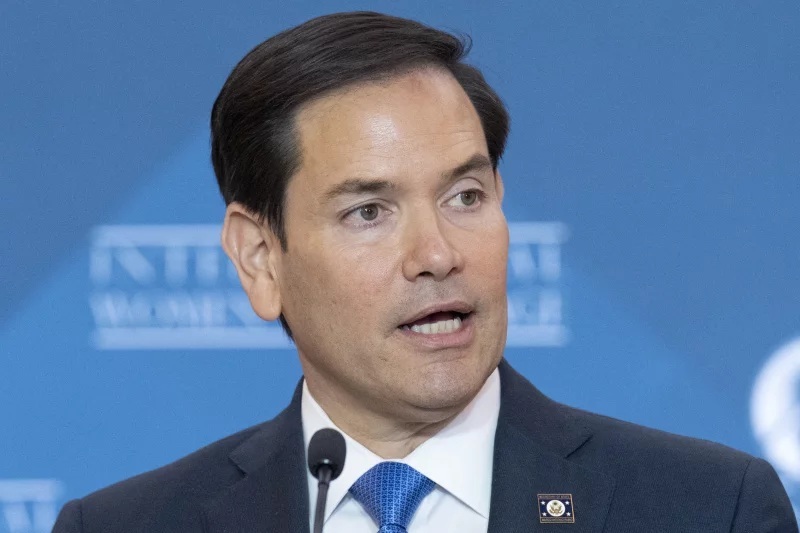
The discussion was triggered during a recent congressional exchange in which Representative Joaquin Castro questioned Secretary of State Marco Rubio about Israel’s nuclear capabilities.
Rubio reportedly stated that it remained long-standing U.S. policy not to publicly acknowledge Israel’s nuclear arsenal, citing diplomatic and strategic considerations.
Castro responded by raising concerns about the implications of such ambiguity, arguing that if Israel does possess nuclear weapons, uncertainty over its “red lines” could present risks in the event of a regional escalation.
The exchange has revived criticism from some lawmakers and international observers who argue that U.S. nuclear policy has often been inconsistently applied across different regions.
The United States has repeatedly led global efforts to prevent Iran from acquiring nuclear weapons, imposing sanctions and pursuing diplomatic negotiations over its nuclear programme.
Iran, for its part, has long maintained that its programme is peaceful and has accused Western powers of applying uneven standards while overlooking the nuclear capabilities of allied states in the region.
This perception of imbalance has been a recurring theme in Global South diplomatic circles, where critics argue that selective enforcement of non-proliferation rules undermines the credibility of international institutions such as the Nuclear Non-Proliferation Treaty (NPT).
Analysts warn that perceived double standards risk weakening global consensus on nuclear restraint.
Human rights advocates and peace organisations also argue that ambiguity surrounding undeclared or unacknowledged nuclear arsenals complicates regional security calculations and reduces transparency in an already volatile geopolitical environment.
John Steinbach, co-founder of the Hiroshima Nagasaki Peace Committee of the National Capital Area, has argued in published research that nuclear opacity in the Middle East raises serious ethical and security concerns.
His work, however, remains part of an ongoing academic and political debate rather than established international consensus.
Independent journalist Sam Husseini has similarly questioned what he describes as reluctance within U.S. political discourse to openly address nuclear capabilities in allied states.
He argues that such silence contributes to what he describes as inconsistent application of non-proliferation principles.
Critics of the current framework point to past exceptions in global non-proliferation enforcement, including cases involving India and Pakistan, as evidence that geopolitical considerations often shape nuclear policy more than universal standards.
Supporters of U.S. policy, however, maintain that strategic ambiguity in certain alliances has historically been used to maintain regional stability and deter escalation.
Observers say the renewed congressional attention highlights a broader and unresolved tension in global nuclear governance: the challenge of balancing strategic alliances with equal application of international norms.
As debates continue, analysts warn that the credibility of the global non-proliferation regime depends heavily on whether major powers are seen to apply rules consistently, regardless of political alignment.
– CAJ News
Previous Post
Next Post


Advertisement